
Here’s what 40 years of teaching has taught me
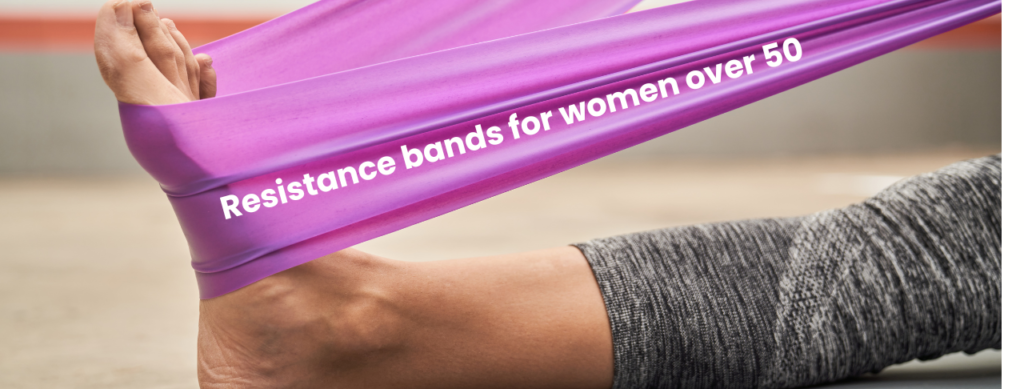
There’s a question I hear regularly, usually from women who are looking at a resistance band for the first time and trying to work out whether this stretchy bit of rubber is actually going to do anything useful.
But will it really make me stronger?
I’ve been in the fitness industry since 1987 and using resistance bands with my clients since 1994. In that time I also ran my private personal training studio for 11 years where the heaviest weight in the room was 5kg – and my clients were women over 50, many of them post-surgery, many of them returning to exercise after years away, all of them wanting to feel stronger and more capable in their bodies.
Every single one of them gained strength. Every single one of them improved their quality of life. Without exception.
So, when people ask me whether resistance bands work, I have 39 years of evidence standing behind my answer.
What the research says
It’s not just my experience either. A peer-reviewed meta-analysis published in SAGE Open Medicine (Lopes et al., 2019) compared elastic resistance training directly against conventional weights – machines and dumbbells – and found no meaningful difference in strength gains between the two methods for either the upper or lower body. The conclusion was clear: elastic resistance training promotes similar strength gains to conventional resistance training, across different populations and different training approaches.
A 2025 systematic review published in Frontiers in Sports and Active Living, looking specifically at older adults, found significant improvements in leg strength, the ability to stand from a chair, walking steadiness, and functional reach in people training with resistance bands – all the things that matter for real daily life.
In other words, the research confirms what I’ve been seeing in my studio and online for nearly four decades.
The bone density question
This one matters, and I want to address it directly.
After menopause, women can lose up to 10% of their bone density in the first five years alone. That loss is largely driven by falling oestrogen levels, and it raises the risk of fragility fractures – particularly at the hip and wrist. It’s one of the most significant health concerns for women over 50, and yet it’s rarely talked about openly.
The good news is that resistance training is one of the most effective things you can do about it. When your muscles pull against resistance, the tendons that attach muscle to bone create a gentle stimulus that encourages bone-building – and research shows that just two resistance sessions per week can slow or even halt bone loss in post-menopausal women.
Crucially, research published in the Journal of Orthopaedic Surgery and Research confirms that elastic resistance band exercise results in measurable increases in bone mineral density in older women. You don’t need heavy weights to protect your bones. You need consistent, progressive resistance – and resistance bands provide exactly that.
Why resistance bands are particularly well suited to women over 50
Here’s something worth understanding about how resistance bands actually work. Unlike a fixed weight, which loads your joint from the moment you pick it up, a resistance band provides variable resistance – the load builds gradually as you stretch it. Your muscles work harder as the movement progresses, rather than being hit with the full force from the start.
For women over 50, and especially for anyone who has had a hip replacement or is managing a joint condition, that gradual loading matters enormously. It means you can work your muscles through their full range of motion without putting sudden stress on vulnerable joints – building strength and protecting bone density at the same time.
There’s also the practical side. Resistance bands are light, portable, and can be used standing, seated, or lying down – which means they’re genuinely accessible regardless of your current fitness level or any physical limitations you’re working around. You don’t need a gym, a rack of equipment, or anyone to spot you. You need a resistance band, a bit of space, and the right guidance.
If you’ve had a hip replacement, you can read more about returning to exercise safely here.
👉Not sure where to begin after a hip replacement?
The real alternative isn’t resistance bands vs weights – it’s resistance bands vs nothing
I want to say something that I think is important, and that doesn’t get said enough.
Most women over 50 who haven’t exercised with weights before are not going to start now. The gym can feel like someone else’s territory – all mirrors and machines and an unspoken assumption that you already know what you’re doing. Gymtimidation is real, and it keeps a lot of women away from the resistance training their bodies genuinely need.
I would far rather see a woman doing fifteen minutes with a resistance band in her living room than feeling too intimidated to walk through a gym door. Not because resistance bands are second best – we’ve already established they’re not – but because the real enemy of strong bones and capable muscles isn’t choosing the wrong equipment. It’s choosing nothing at all.
If resistance bands feel manageable, accessible, and less daunting than a weight rack – that’s not a compromise. That’s a smart, realistic decision that your body will thank you for.
A note on progression – and why guidance matters
The resistance band is only as effective as the programme behind it – and only as safe as the person using it.
This is something I feel strongly about. A resistance band might look simple but used incorrectly it can place real strain on vulnerable joints, reinforce poor movement patterns, or – particularly for anyone post-surgery or managing a joint condition – do more harm than good. The resistance band doesn’t know your history. It doesn’t know you’ve had a hip replacement, or that one shoulder is less stable than the other, or that your deep core muscles need to be properly activated before you load your arms.
After 32 years of teaching with resistance bands, I can tell you that technique is everything. The difference between an exercise that builds strength safely and one that quietly creates a problem often comes down to something as subtle as the angle of your wrist, the position of your pelvis, or how you’re holding the resistance band. Most people instinctively grip too tightly – and that matters more than you might think. A tight grip can cause a spike in blood pressure, and it almost always leads to breath-holding, which is the last thing you want when you’re working your muscles. Relaxed hands, controlled movement, and steady breathing aren’t small details. They’re the difference between exercise that helps and exercise that doesn’t.
What builds real, lasting strength is progressive, purposeful movement with proper attention to how you’re moving, not just that you’re moving at all. That’s a principle I’ve applied with every client I’ve ever worked with, and it’s the foundation that my Online Mobility & Movement Hub – BRIO! is built on. Correct technique isn’t just important – it’s vital. In every sense of the word.
In BRIO! the resistance band sessions are structured with exactly this in mind. We start where your body is right now. We build gradually. And we never sacrifice precision for pace – because in my experience, that’s where injuries happen and confidence disappears.
The bottom line
Resistance bands work. The research confirms it. Almost forty years of working with women over 50 confirms it even more firmly.
If you’ve been putting off starting because you weren’t sure a resistance band could do the job, or because the gym has never felt like your kind of place – now you have your answer.
You’re more capable than you think. And you don’t need anything more than a resistance band and the right guidance to prove it.
Ready to get started?
👉BRIO! Online Mobility and Movement Hub has a full resistance band lesson designed for women who want to build strength at home, at their own pace – no heavy equipment, no gymtimidation, just movement that works.