
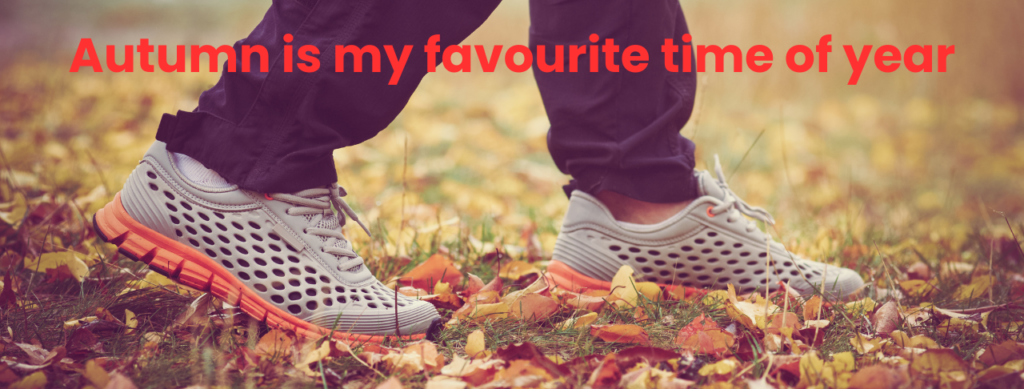
Autumn can be such a beautiful season.
The crisp air. The colours in the trees. The gentle crunch of leaves underfoot.
And yet, for many women, walking after joint replacement can sometimes feel more daunting than enjoyable.
When walking feels uncertain again
I hear it often:
“I’m scared I’ll trip.” “I feel stiff and unsteady.” “I don’t want to undo all the surgeon’s work.”
The operation may have repaired the joint.
But it doesn’t automatically restore your confidence in movement.
That part takes a little more time – and the right kind of support.
A word about autumn terrain
Autumn is beautiful – but it does ask more of us than summer does.
Wet leaves are one of the most underestimated hazards for anyone returning to walking after joint replacement. They’re slippery in a way that can catch you completely off guard, and unlike ice – which we instinctively approach with caution – leaves can look perfectly safe until your foot is already on them.
Low autumn light is another factor. Shadows can make uneven ground harder to read, and pavements that feel familiar in summer can feel surprisingly unpredictable in October.
None of this means you shouldn’t go out. It simply means going out with a little more intention than you might in July.
The case for hiking poles – and why they’re not walking sticks
This is something I feel strongly about, so bear with me.
Walking sticks have their place – but they carry a lot of baggage. There’s something about reaching for a walking stick that feels like an admission. Like you’re crossing a threshold you’d rather not cross.
Hiking poles are an entirely different proposition.
Used by serious walkers, fell runners, and mountain trekkers, hiking poles are an active choice rather than a reluctant one. They say I’m going somewhere rather than I need help. And that distinction matters – not just psychologically, but practically.
Here’s why I recommend them so strongly for women returning to walking after joint replacement:
They give you four points of contact instead of two. On uneven ground, wet leaves, or any surface that feels less than certain, that extra stability is genuinely significant. Your brain knows it too – and your confidence that comes from that knowledge changes how you move.
Two poles are better than one. A single walking stick shifts your weight to one side, which can actually increase the load on your operated hip or knee. Two poles distribute that support evenly, which is far better for your alignment and for the joint you’re protecting.
They encourage a better walking pattern. Using poles correctly – with a natural arm swing, planting the pole just ahead of you as the opposite foot steps forward – actually promotes the reciprocal movement pattern that your body needs to relearn after surgery. You’re not just supporting yourself. You’re reminding your body how to walk well.
They extend your range. Women who might otherwise have turned back after ten minutes often find they can walk comfortably for twenty or thirty with poles – not because they’re working harder, but because they feel safer. And that gradual extension of distance is exactly what rebuilds strength and your confidence over time.
A quick note on height: your poles should be adjusted so that when you hold the grip, your elbow is at roughly a right angle. Too short and you’ll hunch; too long and you’ll lose the benefit. Most hiking poles are fully adjustable and very simple to set.
A word on footwear
This one matters more than most people realise.
For autumn walks after joint replacement, you want a shoe or boot with a firm, grippy sole – not fashion trainers, not flat pumps, and definitely not anything with a smooth leather sole. You want something that grips the ground and tells your foot exactly where it is.
A low heel is fine. A raised heel is not ideal – it pitches your weight forward slightly in a way that increases the demand on your hip and changes your whole walking pattern.
Ankle support is worth considering too, particularly on uneven ground. A low walking boot rather than a trainer gives you a little more reassurance without feeling heavy or cumbersome.
And laces or firm fastenings rather than slip-ons – you want to feel that your foot is held securely inside the shoe, not sliding around with each step.
How far is far enough is far enough?
Autumn has a way of making you want to keep going. The air is cool and clear, the colours are extraordinary, and there’s something about the season that feels energising after the heat of summer. It’s easy to walk further than you planned simply because it feels so good to be out.
But after joint replacement, how you feel during a walk and how you feel the next morning can be quite different things. A gentle rule of thumb: if you’re unsure whether you’ve done too much, you probably have. Turn back a little earlier than you think you need to. Build up the distance gradually over days and weeks rather than all at once.
Rebuilding your confidence, step by step
And just so it doesn’t come as a surprise – you need to know that your confidence won’t return all at once.
It builds gradually, through small, steady experiences that remind you your body can be trusted again.
That might begin with:
- gentle movement at home
- learning how to position yourself safely
- taking short, supported walks
- noticing what feels better, not just what feels difficult
There’s no need to rush this process.
What actually helps
What makes the biggest difference is not doing more – it’s doing the right things, in the right way.
Less is definitely more!
That means:
- moving at a pace that allows you to think and adjust
- understanding how to align your body properly
- building strength where it’s needed most
- restoring mobility without strain
When those pieces come together, walking starts to feel less uncertain. And gradually, more natural again.
Trust comes before distance
This is one of my favourite sayings.
It’s so easy to think you need to walk further or do more.
But what really matters is how it feels.
When you begin to trust your body again:
- your stride becomes more natural
- your balance improves
- your confidence grows
And those autumn walks begin to feel like something you can enjoy again – rather than a chore that you have to get through.
You don’t have to figure it out alone
Having guidance can make this process feel much less overwhelming. A structured, step-by-step approach helps you understand what your body needs – and how to support it safely.
If you’d like a calm, supportive way to begin rebuilding your confidence, you’re very welcome to explore what I offer here in BRIO! my Online Mobility & Movement Hub :