
As the years go by, you may start to notice small changes in how your body moves and feels.
A little more stiffness in the morning.
A slightly shorter stride when you walk.
A sense that you don’t quite bounce back as easily as you used to.
Many people assume this is simply “getting older.”
But in truth, much of what you’re experiencing isn’t down to age itself – it’s often the result of your muscles and joints no longer working in harmony.
When your body falls out of balance
Your muscles work in pairs, a bit like pulleys. But they don’t always share the workload evenly.
When one muscle becomes short and tight, it tends to overwork, while its opposite partner becomes lengthened and less effective.
Unless that shortened muscle learns to release, the longer one can’t do its job properly – and movement becomes less efficient.
Over time, this creates a ripple effect throughout your body.
It can change the way you stand, move, and even breathe.
The good news
You can change this – gently, gradually, and safely.
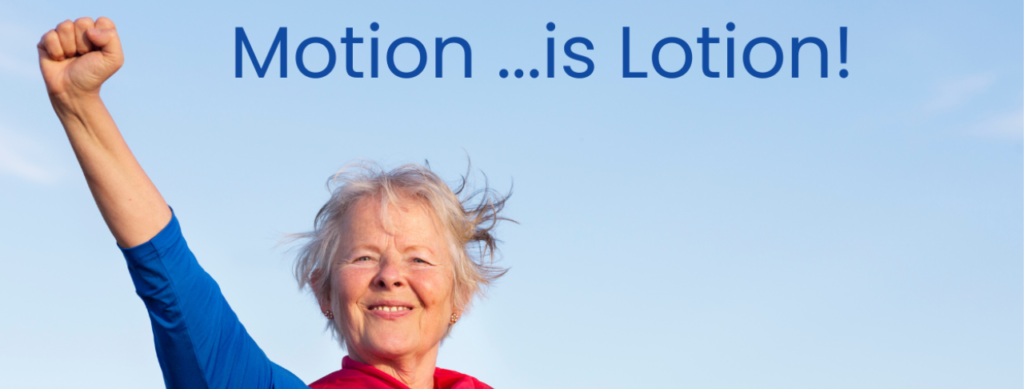
Movement really is medicine for your body – or, as you may have heard before, “motion is lotion.”
And the right kind of exercise can help you restore what time and lifestyle may have taken away.
If you’re looking for a gentle way to begin, you might find this helpful:
A simple way to bring your body back into balance
In my work, I focus on three simple principles that help your body begin to rebalance.
1. Stretch what’s short
Tight, shortened muscles can pull your posture out of alignment and make movement feel restricted.
Stretching helps release these muscles and restore a sense of length and ease.
This isn’t about forcing your body into uncomfortable positions or chasing flexibility for its own sake.
It’s about restoring freedom – in your joints, along your spine, and in the way you breathe.
Regular, mindful stretching can improve circulation, calm the nervous system, and ease tension in areas like your neck, hips, and lower back.
2. Mobilise what’s stiff
Joints are designed to move.
But when you spend long periods sitting, driving, or repeating the same daily patterns, those joints can become less cooperative.
Mobility exercises gently reintroduce movement, helping you regain range and rediscover fluidity.
You might hear this described as “oiling the hinges.”
When your joints move more smoothly, everything else begins to follow – your balance improves, your coordination sharpens, and that familiar stiffness starts to ease.
Even small, consistent movements – turning your head, circling your wrists, rolling your shoulders – can make a noticeable difference over time.
3. Strengthen what’s underused
Strength training doesn’t have to mean heavy weights or complicated routines.
Often, it’s simply about reawakening muscles that haven’t been doing their share of the work.
When you strengthen what’s underused, you give your body the support it needs to move safely and confidently.
Stronger muscles help protect your joints, improve posture, and make everyday tasks – like climbing stairs or carrying shopping – feel easier.
This isn’t about performance or aesthetics.
It’s about feeling capable in your own body.
The goal: balance
When you stretch what’s short, mobilise what’s stiff, and strengthen what’s underused, your body begins to find its natural balance again.
You stand a little taller.
You move with more ease.
You feel lighter – physically and mentally.
Balance isn’t just about posture or coordination.
It’s about how it feels to be in your body.
That quiet confidence that allows you to walk, reach, bend, and breathe with freedom.
A gentle place to begin
If this resonates with you, there are simple ways to begin.
I’ve created an online space where everything is broken down step by step – helping you stretch what’s short, mobilise what’s stiff, and strengthen what’s underused, at your own pace.
Have a look around – there may be something here that helps.
With care,
Fiona